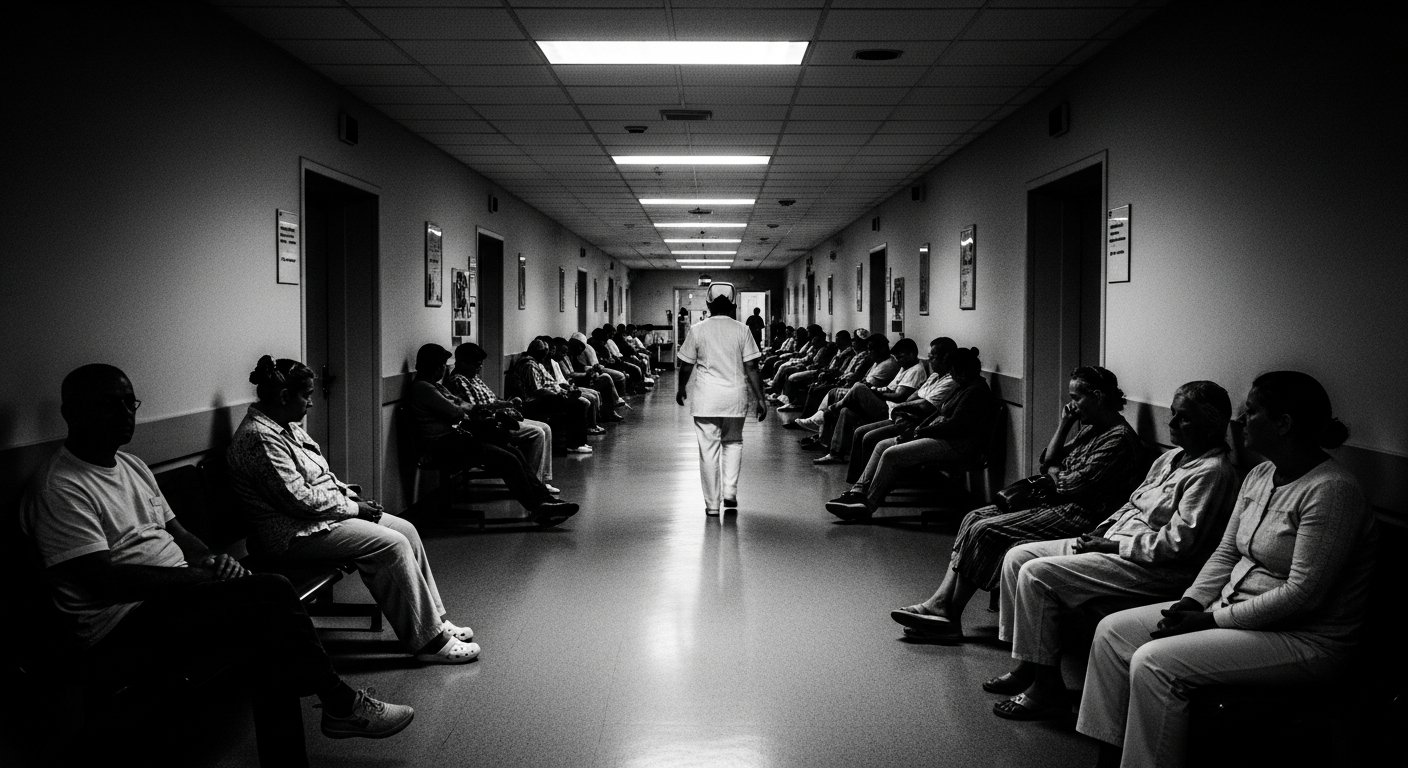
At the end of fiscal year 2027, without corrective Congressional action, federal Medicaid funding to Puerto Rico will reset to a lower 2019 baseline. The practical meaning of that sentence is this: 1.5 million Puerto Ricans who currently receive healthcare coverage through Medicaid and Mi Salud face an immediate and severe disruption to their coverage. There is no contingency plan. There is no floor.
Puerto Rico's Medicaid cap stands at approximately $3.645 billion for FY2026. Researchers at the Center for American Progress and the Centro para una Nueva Economía estimate the island actually requires roughly $8 billion annually to adequately serve its population. That gap — between what is allocated and what is needed — has existed for decades. What is different now is the timeline. The clock is no longer abstract. It expires in eighteen months.
"Puerto Rico's Medicaid funding cliff is not a future problem. It is a present crisis running on a countdown timer. Every month without Congressional action is a month closer to a public health emergency with no emergency protocol."— El Progreso Editorial, March 25, 2026
Medicare Advantage: The Second Cliff
The Medicaid funding timeline intersects with a parallel deterioration in Medicare Advantage payments. In 2026, Medicare Advantage payments to plans serving Puerto Rico were reduced further, with projected losses exceeding $400 million. Physicians and specialists have been leaving the island in accelerating numbers — not only because of compensation, but because the reimbursement environment makes sustainable practice nearly impossible. What cannot be sustained cannot be staffed. What cannot be staffed will not serve patients.
The Political Architecture of Neglect
Puerto Rico is treated differently from states in Medicaid funding not because of public health logic or actuarial necessity, but because of political architecture. As a territory, Puerto Rico has no senators and one non-voting representative in Congress. Healthcare funding formulas that would trigger immediate political consequence if applied to any state are applied to the island without meaningful resistance, because the people most affected cannot vote in federal elections. That is the honest explanation for why this cliff exists and why no legislation has yet been passed to address it.
The Progress Perspective
Healthcare is not a social service. It is an infrastructure of life. A society that cannot keep its people healthy cannot retain its people. The physician exodus, the population contraction, the demographic aging of the island — these are not separate phenomena. They are the same phenomenon expressed at different points in a single causal chain. Correcting the Medicaid funding formula requires Congressional will that has not materialized in decades of advocacy. The question for Puerto Ricans — on the island and in the diaspora — is how to generate that will before the clock runs out.