✦El Progreso✦In Servitute Dolor · In Libertate Labor
About
El Progreso
Founded by José Julián Acosta, 1870. Reimagined 2026 for the island and its diaspora.
"Para las sociedades no existen mas que dos caminos, dos sistemas: ó el régimen del silencio
con todos sus dolores, ó el de la libre emisión del pensamiento con toda su virilidad.
In servitute dolor, in libertate labor."
— José Julián Acosta, El Progreso, September 7, 1870
Lineage
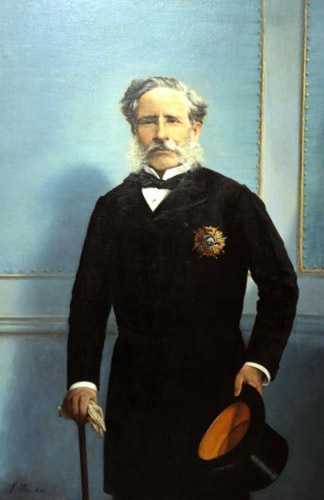
José Julián Acosta y Calbo (1825–1891)
Museo de Arte de Bayamón · Colección Permanente
Born in San Juan on May 11, 1825, José Julián Acosta y Calbo was one of the most consequential
intellectual and political figures in Puerto Rican history. He was a reformer, an abolitionist,
an educator, a historian, and a journalist. He was not primarily a reporter. He was a builder
of institutions and a defender of the idea that Puerto Rican society deserved, and was capable of,
full participation in civilized political life.
Acosta studied in Spain, where he became immersed in the liberal philosophical currents of the
time, including the writings on natural rights and human dignity that would ground his later work.
He returned to Puerto Rico and dedicated his life to its advancement through two instruments he
trusted above all others: education and the press.
He founded El Progreso as a vehicle for the kind of political education he believed Puerto Rico
desperately needed. Not partisan agitation. Not sensationalism. The patient, rigorous work of
helping a people understand the structures that governed their lives, so that they might act
intelligently within them and eventually transform them.
He wrote in the first article published in El Progreso: "When a people begin their political
education, it is of the greatest importance to correct many of the mistaken judgments that habit
and custom have formed." This sentence remains the editorial mandate of this publication.
Editorial Constitution
The following principles are drawn directly from Acosta's original writings in El Progreso
(1870–1875), adapted for 2026. They govern every editorial decision made by this publication.
Principle I
In Servitute Dolor, In Libertate Labor
There are only two paths for a society: the regime of silence, with all its suffering and
compressed violence, or the free emission of thought, with all its productive struggle.
El Progreso chooses labor. Every time.
Principle II
The Press as the Great Corrector
The press does not exist to report. It exists to correct, to instruct, and to elevate.
The writer who is always before public opinion must respect contradiction. Refinement
comes through debate, not avoidance.
Principle III
Parties, Not Factions
Acosta distinguished true political parties, natural organisms of free societies, from
"banderías": factions driven by exclusivism and intransigence. El Progreso names banderías
when it sees them, regardless of their political color.
Principle IV
Education as Liberation
The first act of liberation is education. The first casualty of oppression is the belief
that one's own land can sustain a dignified life. For every structural issue, El Progreso
asks: what do people need to understand?
Principle V
The Delegation of Sovereignty
Acosta wrote that the election of representatives is the most important political act
in a people's life: the delegation of sovereignty. El Progreso prepares the public
for that act. Always.
Principle VI
The Aurora Fugaz
Reform is fragile. Reaction follows progress. Acosta knew this and kept writing. The
answer is not cynicism. It is persistence. El Progreso publishes as long as the work
is unfinished.
What This Platform Rejects
Sensationalism. Crime-focused narratives divorced from systemic context. Clickbait framing.
Fear-based storytelling. Partisan agitation. Content designed to provoke reaction rather than
thought. These are the tools of the regime of silence, dressed in the clothes of liberty.
El Progreso does not use them.
What This Platform Builds
A living intelligence system. A running record of structural patterns across Puerto Rico's
economy, education, governance, healthcare, and diaspora. A place where the island's most
important conversations happen with the rigor they deserve. A platform that treats its readers
as citizens, not consumers. A bridge between the island and its six million-strong diaspora.
A lantern. Not just a mirror.
Editor
José Julián Acosta (2026) is the editor and founder of this reimagined publication. He writes
on governance, structural economics, demography, and the Puerto Rican condition. The name is
inherited by intention — a commitment to the mission of the original, not a claim on the man.
"El Progreso is not here to report what is broken. It is here to help fix it."
— Editorial Mission, 2026
A Note on the Founding Document
In 2026, a copy of Los Partidos Políticos — Acosta's collected articles from El Progreso,
published in 1875 by Imprenta y Librería de Sancérrit at Fortaleza 21, San Juan — was recovered
from the Library of Congress. These articles, originally published in September and October of 1870,
constitute the founding intellectual document of this publication. They are archived in full in
El Archivo.
The fact that Acosta printed from Fortaleza Street, steps from the seat of colonial power, is not
incidental. He was not writing from the margins. He was writing from the center of his city,
trusting in the power of printed argument to do what force could not. That posture is inherited.