Puerto Rico's Department of Education serves approximately 240,000 public school students through a system that receives, on a per-pupil basis, less federal and combined investment than any state in the union. That is not a funding gap. It is a structural indifference written into federal policy and left unaddressed by successive administrations in San Juan and Washington alike.
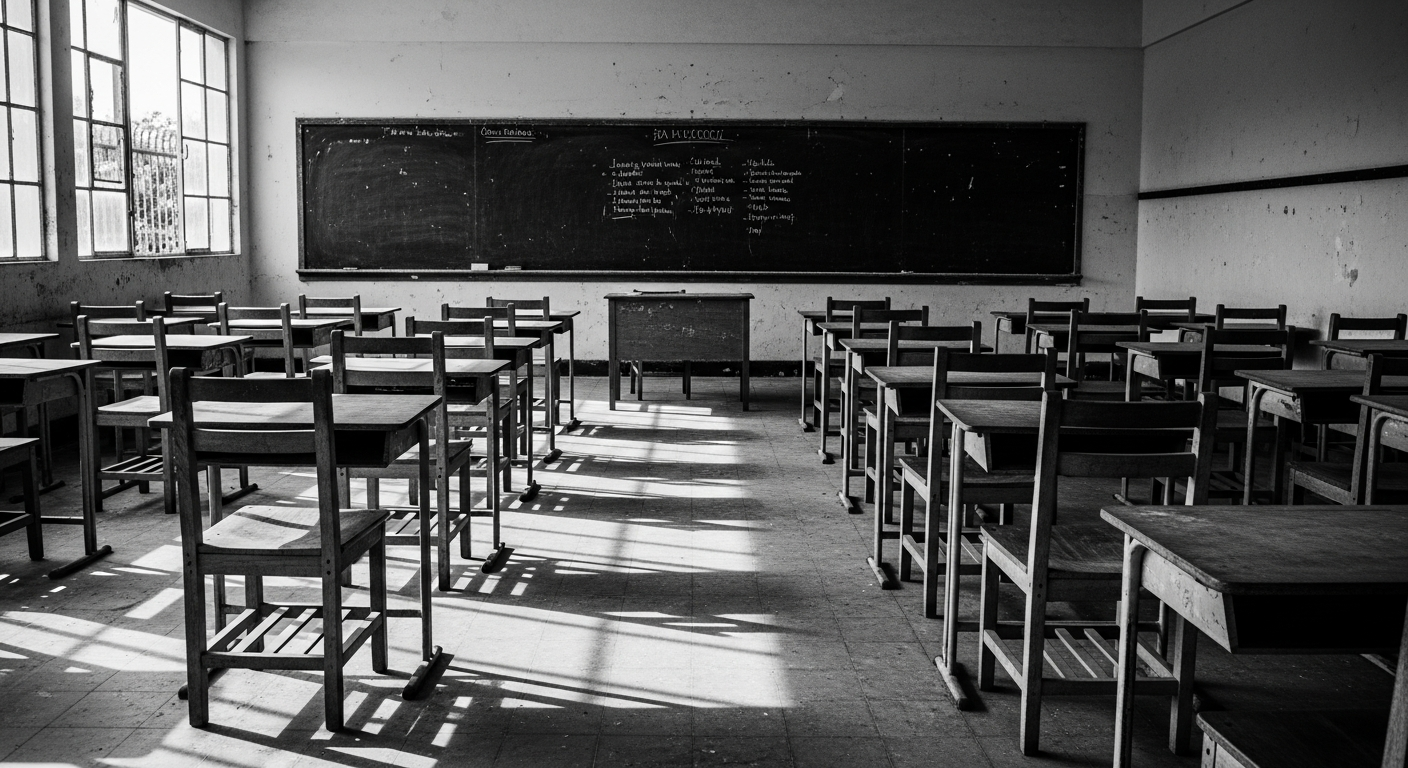
The Puerto Rico Department of Education (PRDE) has lost 42% of its student population over the past decade — a staggering contraction driven by emigration, the aftermath of Hurricane María, declining birth rates, and a healthcare system unable to retain young families. Schools have been closed by the hundreds. Teachers have left for Florida, Texas, and New York, where their credentials transfer and their salaries double. The system is smaller, more fragile, and more dependent on federal support than at any point in the past generation.
"45% of Puerto Rico's education budget is federally sourced. Every federal policy debate in Washington is simultaneously an education policy debate in San Juan."— El Progreso Editorial, April 8, 2026
The Federal Dependency Problem
Approximately 45% of the PRDE's budget comes from federal sources — Title I, IDEA, and pandemic-era relief funds that are now expiring. That means every Congressional budget debate, every executive order touching education spending, every ideological fight in Washington about the Department of Education itself, is simultaneously an education policy debate in Puerto Rico. The island has no senators. It has one non-voting representative. It cannot defend its own schools in the legislature that funds them.
The PRDE's IDEAR decentralization initiative — transferring more control to individual school directors — has shown early promise in some proficiency metrics. But decentralization without adequate resources is delegation without power. A school principal with more autonomy and fewer dollars is not empowered. She is isolated.
The System Behind It
Puerto Rico cannot equalize its own school funding because PROMESA's fiscal constraints limit counter-cyclical investment. The General Fund contribution to education has been compressed repeatedly in the name of debt sustainability. The result is a public school system that performs the social function of an institution of a wealthy territory while receiving the investment of a neglected one.
The Progress Perspective
José Julián Acosta founded this newspaper in 1870 in part to argue for universal education in Puerto Rico. He understood that a colonized people without access to learning was a people whose subjugation was self-renewing. One hundred and fifty-six years later, the argument has not changed. Only the mechanisms of neglect have. The next generation of Puerto Ricans is sitting in underfunded classrooms right now. What happens in those rooms determines whether Puerto Rico's future belongs to the island or to somewhere else.