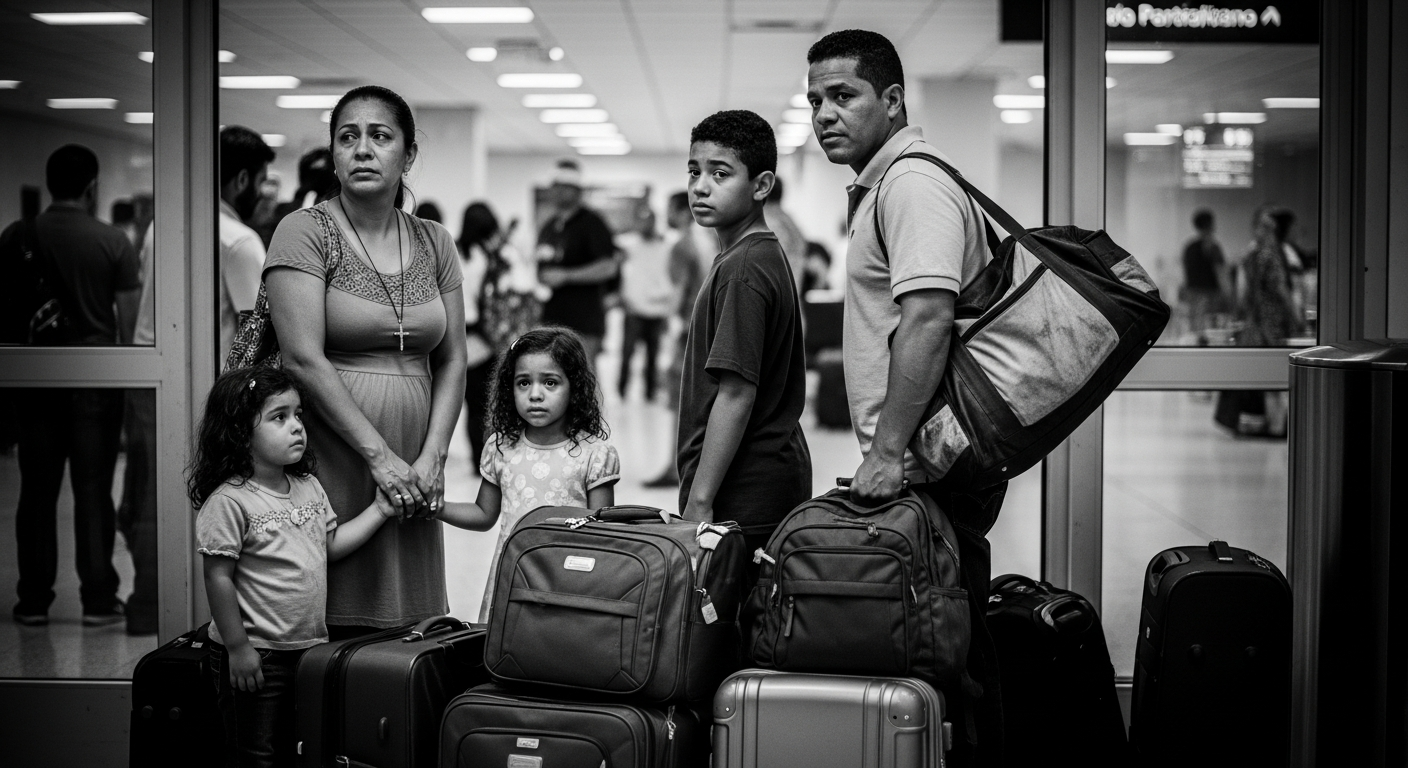
There are approximately 3.2 million people living in Puerto Rico. There are approximately 6 million Puerto Ricans living on the U.S. mainland. That inversion — more of a nation living outside its territory than within it — is not a demographic curiosity. It is a political and economic fact with profound implications that neither the government in San Juan nor the federal government in Washington has adequately reckoned with.
The diaspora votes in federal elections. Puerto Ricans in Florida, New York, Pennsylvania, Connecticut, and Texas vote for senators, representatives, and presidents. They vote on legislation that directly affects the island — Medicaid funding, PROMESA oversight, Jones Act reform, disaster recovery appropriations. In competitive states, the Puerto Rican vote is consequential. And yet the island's government has historically treated the diaspora as an economic safety valve — a population that absorbs unemployment pressure by leaving — rather than as a political constituency worth organizing and engaging.
"Six million Puerto Ricans on the mainland vote in the elections that fund, oversee, and govern the island. They are not a footnote to Puerto Rican politics. They are increasingly its most powerful actors."— El Progreso Editorial, March 4, 2026
Remittances and Cultural Capital
The diaspora sends remittances. It funds family members' medical expenses, home repairs, and education costs that the public sector cannot cover. It sponsors cultural institutions, churches, and community organizations. It carries Puerto Rican identity — language, music, food, political memory — into cities across the continental United States, maintaining a connection to the island that is as real as geography.
That cultural capital has institutional potential that remains largely untapped. Puerto Rican physicians in Boston and Chicago would return to practice if the professional environment made it financially viable. Puerto Rican engineers in Miami and Houston have skills the island's infrastructure recovery requires. Puerto Rican academics at universities across the northeast maintain research connections to the island. The question is whether the government creates the conditions — debt relief, housing support, professional infrastructure, competitive compensation — that make return a genuine option rather than a romantic aspiration.
The Political Architecture of Diaspora Power
The 2024 election demonstrated, again, that Puerto Rican voters in swing states matter in presidential elections. That leverage has rarely been deployed systematically on behalf of issues directly affecting the island. There is no organized Puerto Rican diaspora lobby with the structure of, for example, the Cuban American lobby that shaped decades of U.S. policy toward Cuba. Building that infrastructure — issue-focused, bipartisan, persistent — is the political work of the next decade.
The Progress Perspective
El Progreso is, explicitly, a platform for the island and its diaspora. This publication was conceived as a bridge between the people who live in Puerto Rico and the millions who carry it with them. The diaspora is not the island's loss. It is the island's extended nation — dispersed but not disconnected, politically powerful but organizationally immature. Building the institutional links between the island and its diaspora — cultural, economic, political — is not sentiment. It is strategy. The island needs advocates who vote. The diaspora needs an island worth advocating for. Both are possible. Neither is automatic.